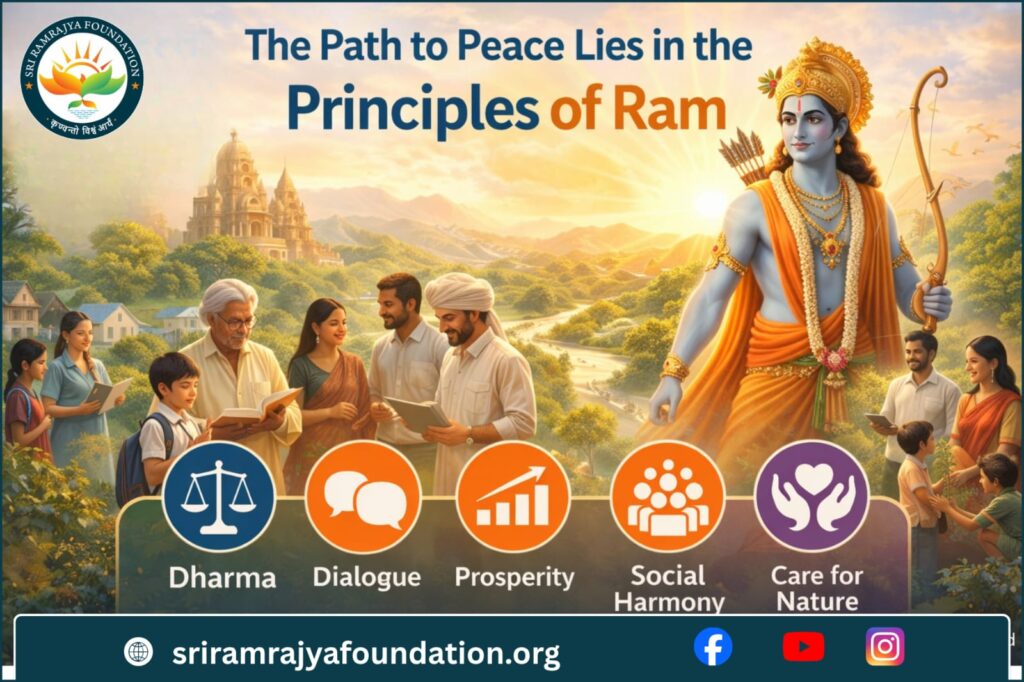
In a world increasingly defined by stress, conflict, and rapid change, the search for peace has become more important than ever. While modern solutions often focus on external systems laws, policies, and technologies true and lasting peace begins within individuals and flows outward into society. One of the most timeless and powerful frameworks for achieving such peace lies in the principles of Lord Ram, often referred to as Maryada Purushottam the ideal human being.
The life and values of Lord Ram, as depicted in the Ramayana, are not just religious teachings but a guide to ethical living, emotional balance, and social harmony. His principles offer a path that leads not only to personal peace but also to a conflict-free and just society.
Understanding the Ideals of Ram
Lord Ram is widely respected as a symbol of righteousness (dharma), truth, compassion and duty. His life was not free from challenges; in fact, it was filled with trials that tested his character at every step. Yet, he remained steadfast in his principles, choosing what was right over what was easy.
This unwavering commitment to values is what makes his life a blueprint for peace. It teaches us that peace is not the absence of problems, but the strength to face them with integrity and calmness.
- Commitment to Dharma (Righteousness)
At the heart of Ram’s life is dharma the principle of doing what is right, regardless of personal cost. Whether it was accepting exile to honor his father’s promise or ruling his kingdom with fairness, Ram always prioritized righteousness.
In today’s world, conflicts often arise when individuals prioritize personal gain over ethical behavior. By following the path of dharma, individuals can make decisions that are fair, just, and beneficial for all. This reduces misunderstandings, builds trust, and lays the foundation for peace.
Living by dharma requires courage and discipline, but it ensures long-term harmony in both personal and social life.
- Truthfulness and Integrity
Truth was a cornerstone of Ram’s character. He never deviated from honesty, even in the most difficult situations. His integrity earned him the trust and respect of everyone around him.
In modern society, dishonesty and lack of transparency often lead to mistrust, disputes, and broken relationships. When individuals and leaders commit to truthfulness, it creates an environment of openness and accountability.
Peace thrives in a society where people can rely on each other’s words and actions. Integrity eliminates confusion and strengthens human connections.
- Self-Control and Emotional Balance
One of the most remarkable aspects of Ram’s personality was his emotional strength. Despite facing exile, separation from loved ones, and intense battles, he maintained calmness and composure.
Today, many conflicts escalate because of impulsive reactions, anger and lack of emotional control. By practicing patience and self-awareness, individuals can respond thoughtfully instead of reacting emotionally.
Self-control not only prevents unnecessary conflicts but also helps in resolving existing ones peacefully. It allows individuals to think clearly and act wisely, even in challenging situations.
- Compassion and Empathy
Ram’s compassion extended to everyone his family, his subjects, and even his adversaries. He treated people with kindness and understood their perspectives.
Empathy plays a crucial role in building peaceful relationships. When individuals try to understand each other’s feelings and viewpoints, it reduces misunderstandings and fosters mutual respect.
In a compassionate society, people support each other rather than compete destructively. This creates a positive environment where peace can flourish naturally.
- Respect for Relationships and Duties
Ram fulfilled every role in his life with sincerity whether as a son, husband, brother, or king. He respected relationships and understood the responsibilities that came with them.
Modern conflicts often arise from neglect of duties or lack of respect in relationships. By valuing commitments and honoring responsibilities, individuals can maintain harmony in their personal and social lives.
Strong relationships built on trust and respect are essential for a peaceful society.
- Leadership with Justice and Fairness
As a ruler, Ram established Ram Rajya, an ideal state where justice, equality, and welfare prevailed. His leadership was not about power but about service to the people.
In today’s world, leadership plays a critical role in maintaining peace. Leaders who are fair, transparent, and people-oriented can resolve conflicts effectively and inspire unity.
A just system ensures that everyone feels heard and valued, reducing dissatisfaction and unrest.
- Acceptance and Sacrifice
Ram’s life teaches the importance of acceptance and sacrifice. He willingly gave up his throne and comfort to uphold his father’s honor. This ability to prioritize greater good over personal desires is key to maintaining harmony.
In contrast, many conflicts today arise from ego, greed, and unwillingness to compromise. Learning to let go and make sacrifices for the benefit of others can resolve many disputes.
Peace often requires individuals to rise above selfish interests and think collectively.
- Unity and Inclusion
Throughout his journey, Ram built alliances with people from different backgrounds—whether it was the Vanaras or other communities. He valued unity and collaboration.
A peaceful society embraces diversity and works together toward common goals. Inclusion reduces divisions and strengthens social bonds.
When people feel included and respected, they are more likely to contribute positively to society.
Applying Ram’s Principles in Modern Life
While the world has changed significantly since the time of Ram, the relevance of his principles remains unchanged. These values can be applied in various aspects of modern life:
- In Personal Life: Practice honesty, patience, and empathy in relationships.
- In Professional Life: Maintain integrity, fairness, and responsibility at work.
- In Society: Promote unity, respect diversity, and support community welfare.
- In Leadership: Focus on service, justice, and transparency.
Even small changes in individual behaviour can create a ripple effect, leading to larger societal transformation.
The Role of Youth in Building a Peaceful Society
The younger generation has a crucial role in shaping the future. By adopting the principles of Ram, youth can become responsible citizens and leaders.
They can:
- Promote positive communication and avoid unnecessary conflicts
- Stand up for truth and fairness
- Practice emotional intelligence and self-discipline
- Contribute to social harmony through awareness and action
When young minds are guided by strong values, the vision of a peaceful society becomes achievable.
Challenges in Following the Path
While the principles of Ram offer a clear path to peace, following them is not always easy. Modern life presents challenges such as peer pressure, competition, and materialistic desires.
However, true strength lies in staying committed to values despite these challenges. It requires conscious effort, self-reflection, and continuous improvement.
Peace is not achieved overnight; it is a journey that requires dedication and perseverance.
Conclusion
The path to peace does not lie in external solutions alone but in the values we choose to live by. The principles of Lord Ram dharma, truth, compassion, self-control and justice provide a timeless guide for achieving harmony in both personal and social life.
By incorporating these principles into our daily actions, we can reduce conflicts, build stronger relationships, and create a more just and peaceful society. The vision of Ram Rajya is not just an ideal of the past but a possibility for the present and future.
Peace begins with each individual. When we choose righteousness over convenience, understanding over judgment, and unity over division, we take a step closer to a world where peace is not just a dream, but a reality.